
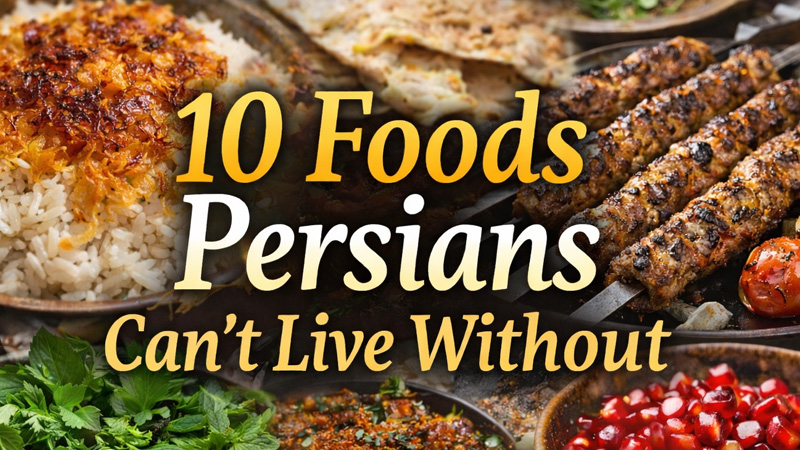
10 Foods Persians Can’t Live Without
Persian food is not just about eating. It is about memory, family, balance, and tradition. Meals are rarely rushed. Recipes are rarely exact. Food is how stories are passed down, how love is shown, and how culture survives across generations and borders.
Ask a Persian family what food they cannot live without, and you will not get a single answer. You will get ten answers. Maybe twenty. Probably followed by a debate. That is because Persian cuisine is deeply layered, built on essential ingredients and dishes that appear again and again, no matter where Persians live in the world.
From everyday staples to dishes saved for special occasions, these foods are woven into daily life. They show up at family dinners, celebrations, holidays, and moments of comfort after a long day.
Here are 10 foods Persians truly can’t live without, not just because they taste good, but because they carry meaning.
1. Rice (Chelo)
Rice is the foundation of Persian cuisine. It is not a side dish. It is the centerpiece of the meal.
Persian rice is light, fluffy, aromatic, and carefully prepared. It is rinsed multiple times, parboiled, steamed, and layered with oil or butter to create the crown jewel of Persian cooking: tahdig. That golden, crispy crust at the bottom of the pot is often fought over at the table and considered the best bite.
Rice accompanies stews, kebabs, grilled vegetables, and even simple meals of yogurt and herbs. There are endless variations, from plain white rice to jeweled rice filled with barberries, pistachios, and orange peel.
More than anything, rice represents patience and care. No one rushes Persian rice. It demands attention, timing, and respect, which is why many Persians believe you can judge a cook by their rice alone.
2. Bread (Nan)
While rice dominates main meals, bread is never far from reach.
Persian bread is used constantly, from breakfast to late night snacks. Flatbreads are torn, folded, and used to scoop up cheese, herbs, walnuts, and stews. Bread is not just eaten. It is used.
Persians rarely sit at a table without bread present. Even when rice is served, bread still has a place. Rice feels ceremonial. Bread feels casual and comforting.
Warm bread with feta, herbs, and tea is one of the simplest and most beloved meals in Persian culture. It brings people back to childhood mornings, neighborhood bakeries, and meals shared without effort.
3. Fresh Herbs (Sabzi)
Fresh herbs are essential in Persian cooking.
A traditional Persian table often includes a plate of fresh herbs such as parsley, cilantro, dill, mint, basil, and tarragon. These herbs are eaten raw, wrapped in bread, or paired with cheese and walnuts.
Herbs also play a major role in cooked dishes. Some stews contain so many herbs that they turn deep green and aromatic, filling the kitchen with a recognizable scent long before dinner is served.
Beyond flavor, herbs symbolize balance and freshness. Persian cuisine has always valued harmony between ingredients, and fresh herbs help achieve that balance both in taste and tradition.
4. Yogurt (Mast)
Yogurt quietly supports nearly every Persian meal.
It cools, balances, and grounds rich dishes. Yogurt is eaten plain, mixed with salt, herbs, or garlic, or thinned into refreshing drinks. It appears as a side rather than a centerpiece, but its presence matters.
A spoonful of yogurt between bites resets the palate and keeps the meal from feeling heavy. It brings contrast and calm to bold flavors.
For many Persians, yogurt is also associated with health and comfort. It is eaten daily in many households and believed to help maintain balance in both body and spirit.
5. Kebabs
Kebabs are one of the most recognizable Persian foods, but they represent far more than grilled meat.
They symbolize gathering, celebration, and togetherness. Kebabs are often served at family events, holidays, and outdoor meals where people linger and talk long after the food is gone.
Preparation matters. Meat is seasoned carefully and grilled with intention. Kebabs are served with rice, grilled tomatoes, raw onions, herbs, and butter, creating a plate where every element supports the others.
For Persians living abroad, kebabs often become a powerful connection to home. The smell alone can bring back memories of summer nights, family gatherings, and shared laughter.
6. Stews (Khoresh)
Stews are the heart of Persian home cooking.
They are slow cooked, layered, and deeply comforting. Persian stews are not rushed. They simmer for hours, allowing flavors to deepen and ingredients to melt together.
Many stews balance sour and sweet flavors using dried limes, barberries, herbs, or pomegranate. Each stew has its own identity, yet they all feel familiar.
Served over rice, stews create a perfect harmony of texture and flavor. For many families, these are the meals tied most closely to childhood, routine, and home.
7. Tea (Chai)
Tea is woven into Persian life from morning to night.
It is served after meals, during conversations, and whenever guests arrive. Tea is not rushed. It is poured, refilled, and enjoyed slowly.
Persian tea is strong, dark, and aromatic. It is often paired with sugar cubes, dates, or sweets. Drinking tea is as much about connection as it is about taste.
In many homes, tea is the answer to almost everything. It brings people together, softens conversations, and creates space to pause.
8. Saffron
Saffron is the soul of Persian cooking.
Used sparingly, it adds aroma, color, and depth to rice, desserts, stews, and drinks. A small amount transforms an entire dish.
Saffron is often associated with care and celebration. The process of blooming it in warm water feels intentional and ceremonial.
For many Persians, the scent of saffron triggers memories of holidays, family gatherings, and meals where extra love was poured into every step.
9. Onions
Onions form the backbone of Persian cuisine.
Nearly every dish begins with onions sautéed slowly until golden. They provide sweetness, depth, and structure to stews, rice dishes, and sauces.
Raw onions are also served alongside meals, especially kebabs, adding sharpness and contrast to rich flavors.
They may not be glamorous, but Persian cooking would not exist without them. Onions prove that the most important ingredients are often the most humble.
10. Pomegranate
Pomegranate holds both culinary and symbolic importance in Persian culture.
Its tart sweetness appears in sauces, stews, and drinks, adding brightness and complexity. It cuts through richness and elevates dishes.
Beyond flavor, pomegranate represents life, abundance, and renewal. Its presence in food often signals something special.
When pomegranate is used, it connects the meal to history, tradition, and cultural identity.
Why These Foods Matter
These foods are constants. They appear in everyday meals and grand celebrations alike. They adapt to new environments while remaining deeply rooted in tradition.
Persian cooking values balance. Rich and fresh. Warm and cool. Simple and complex. These foods work together to create that harmony.
For anyone learning Persian cooking, understanding these staples is the first step. Once you know them, everything else begins to make sense.
Bringing Persian Food Into Your Own Kitchen
You do not need to be Persian to appreciate Persian food. It welcomes patience, generosity, and care.
Start with rice. Learn to prepare it properly. Keep herbs fresh. Add yogurt to the table. Drink tea slowly. Cook stews when time allows. Use saffron with intention.
These foods are not just ingredients. They are traditions preserved through cooking and shared through generations.
This is what Persian food is about. Connection, comfort, and culture, served one dish at a time.
Wooooow
Aww thank you! I’m so glad you liked it